From early-stage product development to advanced testing, OnePointe Solutions helps organizations plan laboratory furniture around their research, equipment, workflow and available space.
Every R&D laboratory begins with the work your team performs. We take the time to understand your research processes, equipment, number of users, storage needs, utility requirements and plans for future growth. Whether you have architectural drawings, an equipment list or an wanting to convert an existing space our team can help define the furniture scope around your laboratory’s needs.
Although each R&D lab serves a different purpose, many share key features. Experimentation and prototyping areas support both theoretical work and hands-on testing. Instruments and analytical tools help teams study samples in detail. In addition, utility and containment systems support the lab’s processes and equipment.
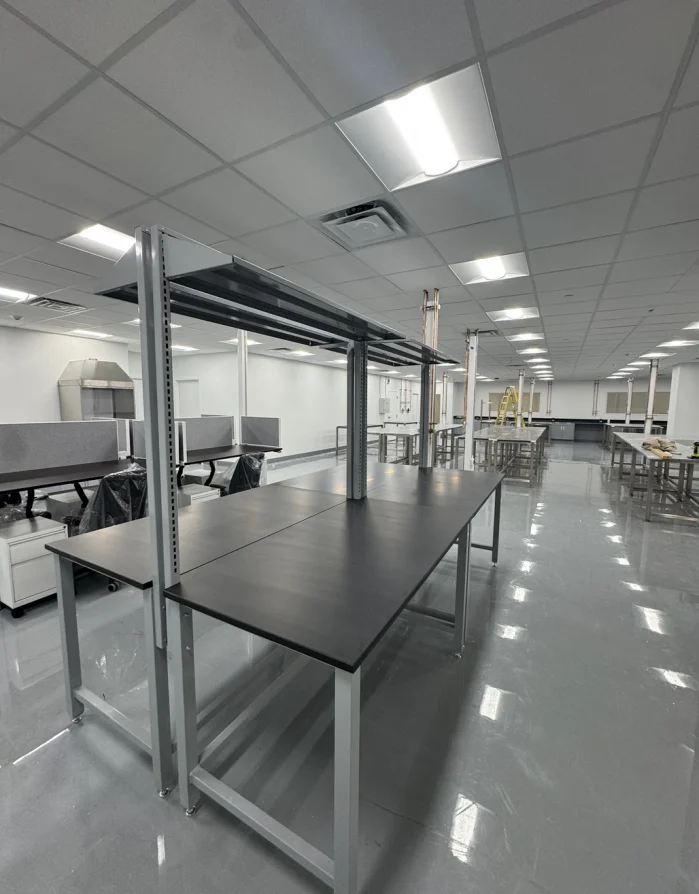
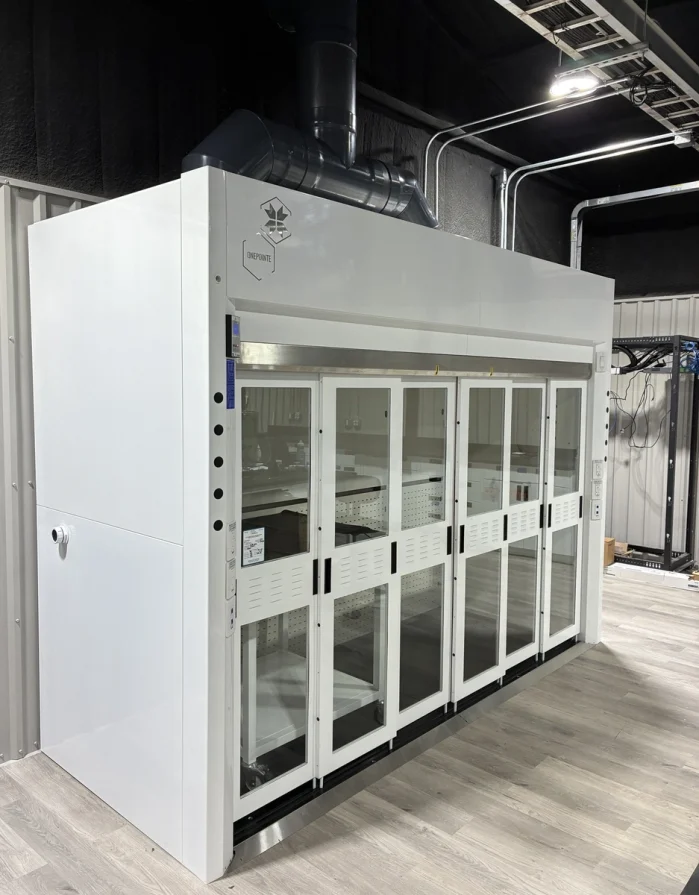
Once the furniture requirements are set, we develop a detailed quotation over the selected casework, tables, work surfaces, storage and supporting products. After approval, our team creates project drawings to coordinate furniture placement, dimensions and applicable service requirements. Finally, we begin manufacturing after your project team reviews and approves the final drawings, project details and form of payment is given.
Regardless of the type of R&D lab that you have, it's important to consider these elements: Flexibility and adaptability for rapid changes in the lab, safety and compliance if your lab deals hazardous materials, complex machinery, sustainability to reduce the labs environmental footprint and environmental control for accurate precision for indoor calibrations.
R&D programs rarely remain static. New equipment, changing processes and expanding teams can quickly alter how a laboratory operates. Modular tables, mobile storage, adjustable-height workstations and adaptable service systems help your space respond to new requirements without replacing the entire furniture package.
Reposition modular and mobile furniture as teams, equipment, and workflows change. This flexibility helps you adapt the layout to new research needs.
Plan workstations around instrument dimensions and loads. Also, allow room for the clearances and access each instrument requires.
Where applicable, coordinate power, data, plumbing, and gases with the furniture layout. Include these needs early in the planning process.
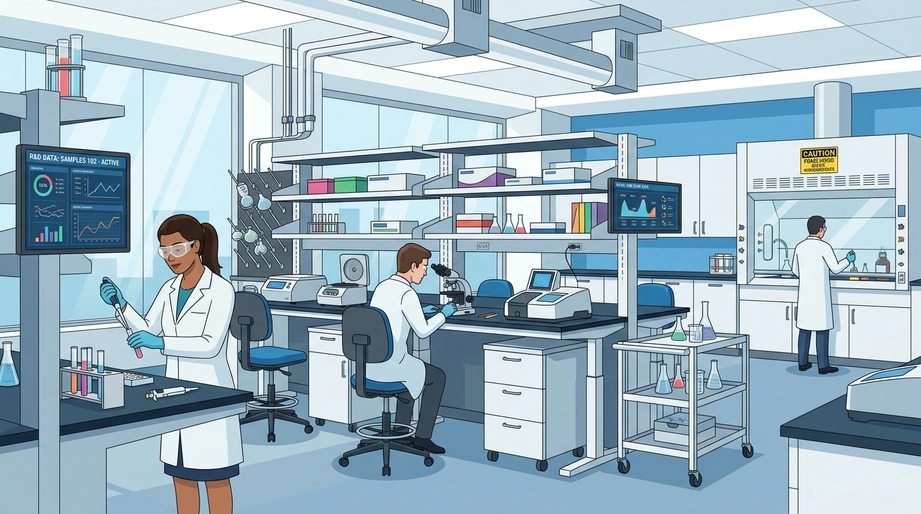
Every R&D laboratory has different operational requirements. A materials laboratory may prioritize heavy equipment and chemical-resistant surfaces, while an electronics facility may require ESD protection and integrated power. We’ll develop furniture packages around the work in the lab, from experiments to cleaning regimen. Not a one-size-fits-all laboratory template.
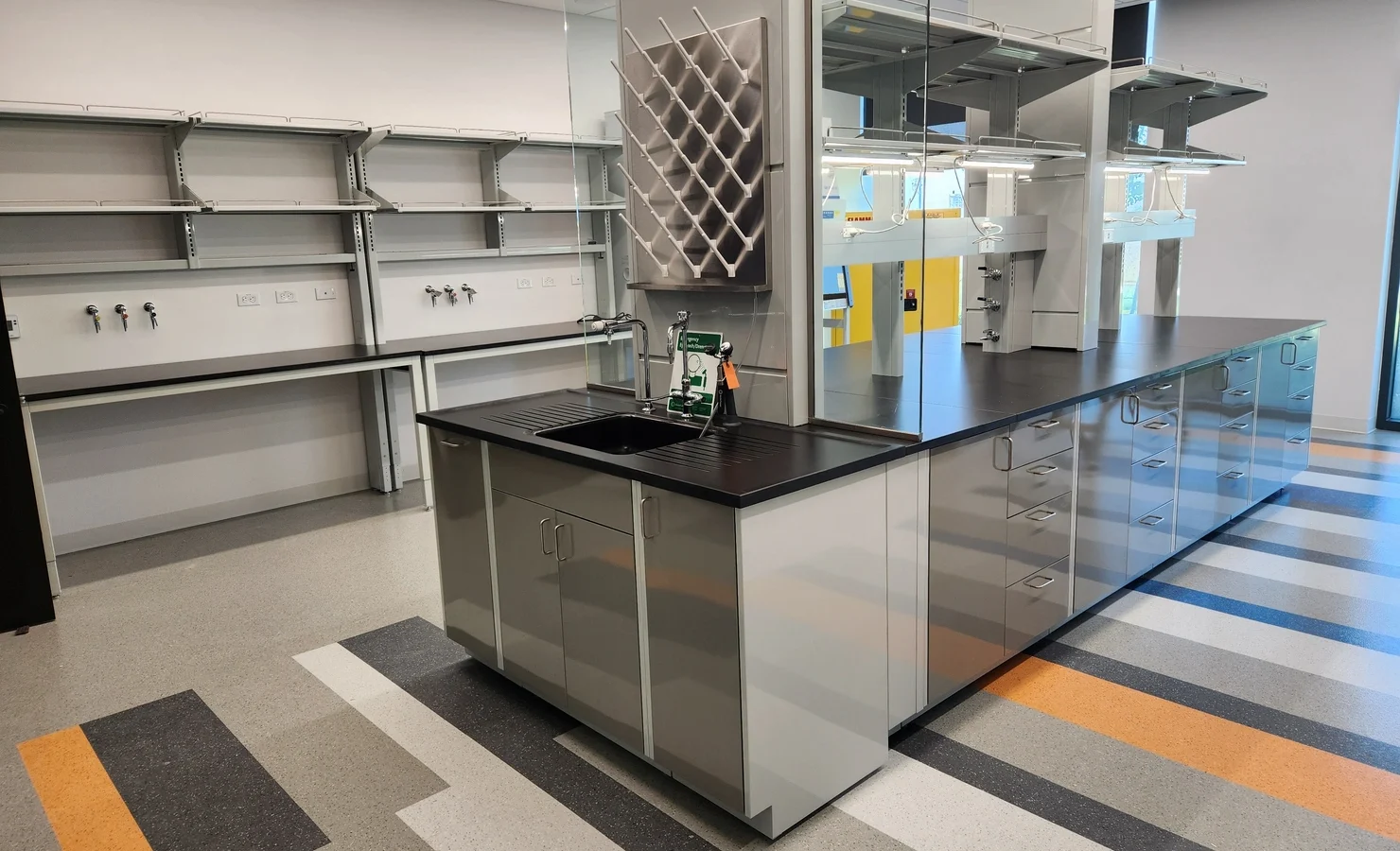
The Challenge
Transform a non-laboratory building into scalable research space for early-stage biotechnology companies with different equipment and workflow requirements.
The Solution
OnePointe supplied flexible laboratory system tables and integrated serviced islands that could support changing tenants and be repeated across multiple rooms.
The Result
MA Modern, effiecient life science space that accelrates collaboration and advances innovation.
Map how samples, employees and information move through the laboratory. Furniture placement should support the work sequence while reducing unnecessary movement and congestion.
Select casework and work surfaces based on the chemicals, moisture, heat, cleaning agents and frequency of exposure expected in the laboratory.
Identify instrument dimensions, operating clearances, weight, vibration sensitivity, heat output and utility connections before finalizing the furniture layout.
Consider how new programs, equipment and employees may affect the space. Modular furniture and accessible services can make future changes easier to manage.
R&D laboratories commonly use a combination of fixed casework, modular lab tables, adjustable-height workstations, mobile cabinets, laboratory islands, shelving and equipment-specific benches. Depending on the research, the space may also require sinks, service fixtures, fume hoods, biosafety cabinets, ESD workstations or vibration-resistant tables. The furniture package should be selected around the laboratory’s workflow, equipment, utilities, materials and anticipated future changes.
An R&D laboratory supports experimentation, discovery and the development of new products or processes. Because research methods and equipment may change, these spaces often benefit from flexible furniture and adaptable utility access. A quality-control laboratory typically performs repeatable tests under established procedures to verify that materials or finished products meet defined requirements. Some facilities combine both functions, but their workflows, documentation needs and furniture priorities may differ.
Yes. An existing office or commercial space can often be converted into an R&D laboratory, but feasibility depends on the research activities, equipment, utilities and safety requirements. The project may require coordination with an architect, general contractor, HVAC specialist, plumber and electrician to address ventilation, power, plumbing, structural capacity and applicable codes. OnePointe can help plan and supply the laboratory furniture layout around your workflow, equipment and available space.
Begin with a complete equipment list that identifies each instrument’s dimensions, weight, required clearances, utility connections, heat output and sensitivity to vibration. The furniture layout should also provide safe access for operation, maintenance and future replacement. Planning around the equipment early helps determine where specialized tables, power, data, plumbing, gases, ventilation and storage are required while preserving an efficient workflow through the laboratory.
Yes. Modular furniture such as Proteus tables, FLEX laboratory systems, mobile tables, mobile cabinets and adjustable island shelving can be reconfigured as research programs, equipment and staffing needs change. Fixed casework is less adaptable and is generally best used in permanent service areas, such as sinks and plumbing locations. For many R&D laboratories, a hybrid design combining fixed service zones with modular work areas provides the most practical balance of stability and long-term flexibility.
The best time to involve a laboratory furniture manufacturer is after the building or space has been selected and the laboratory’s workflow, equipment and general requirements are understood but before construction documents and utility locations are finalized. Early coordination allows tables, casework, sinks, fume hoods, power and plumbing services to be incorporated into the project plans. If no space has been selected and the laboratory’s purpose is still undefined, it may be too early to develop an accurate furniture scope.
There is no single countertop material that is best for every R&D laboratory. Selection should be based on the chemicals, heat, moisture, cleaning agents, impact and equipment loads expected in each work area. Epoxy resin, phenolic resin, stainless steel and chemical-resistant composite surfaces each offer different advantages. Reviewing the laboratory’s processes and chemical-resistance requirements before specifying the surface helps prevent premature damage and unnecessary cost.
Whether you have architectural drawings, an equipment list, a preliminary sketch or an existing space that needs to be converted, OnePointe can help define the laboratory furniture scope around your research, workflow and project schedule.