


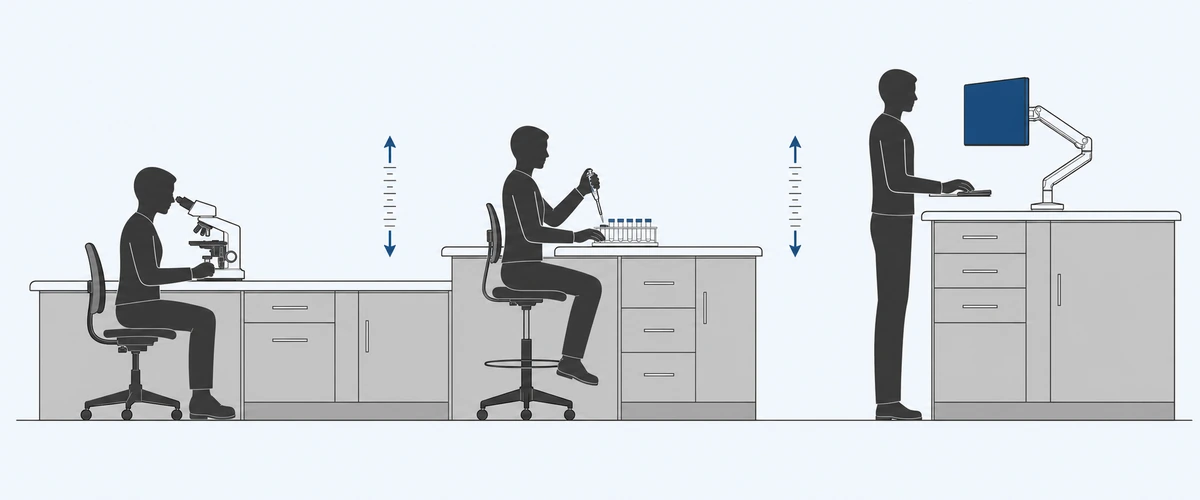
Lab work is precise, physical work. Techs pipette hundreds of micro-samples. They stand at fume hoods for hours. They hunch over microscope stages. It all adds up. So preventing RSI in research labs should be a top priority for any lab manager.
According to OSHA data, musculoskeletal disorders and repetitive strain injuries make up more than one in three worker injury cases in labs. When discussing plans for research labs, preventing RSI should always be front of mind. Beyond the human cost, managers lose hours. Comp claims rise. And research throughput slows.
Designing out RSI means moving away from one-size-fits-all furniture. Instead, an ergonomic, human-factors framework can protect the team. At the same time, it can lift daily productivity. By focusing on preventing RSI in research labs at the design stage, you reduce long-term risks.
Quick answer: preventing RSI in research labs
For lab managers and architects: the fix comes down to one thing. Spec adjustable, human-factors furniture at design time. Do not retrofit once the pain has started. Four moves cover most of the risk:
- Electric height-adjustable workbenches. A 26″ to 44″ range lets users switch between sit and stand. That change tends to cut lumbar load and neck strain. It’s a practical strategy for research labs preventing RSI through better ergonomics.
- Modular cantilevered casework. No fixed knee-well means real legroom. That helps keep shoulders neutral, supporting the goal of preventing RSI in research labs with modern casework.
- Task-specific seating with foot rings. On any high-bench stool, spec a 360-degree foot ring, active lumbar support, and tilt. Ergonomics like these are critical in research spaces focused on RSI prevention.
- Dedicated microscope and pipetting stations. Use anti-vibration tables. Add bevel-edged tops and arm supports to cut wrist strain. All of these adjustments are part of an overall approach to preventing RSI in research labs.
Ergonomic risk factors in daily lab work
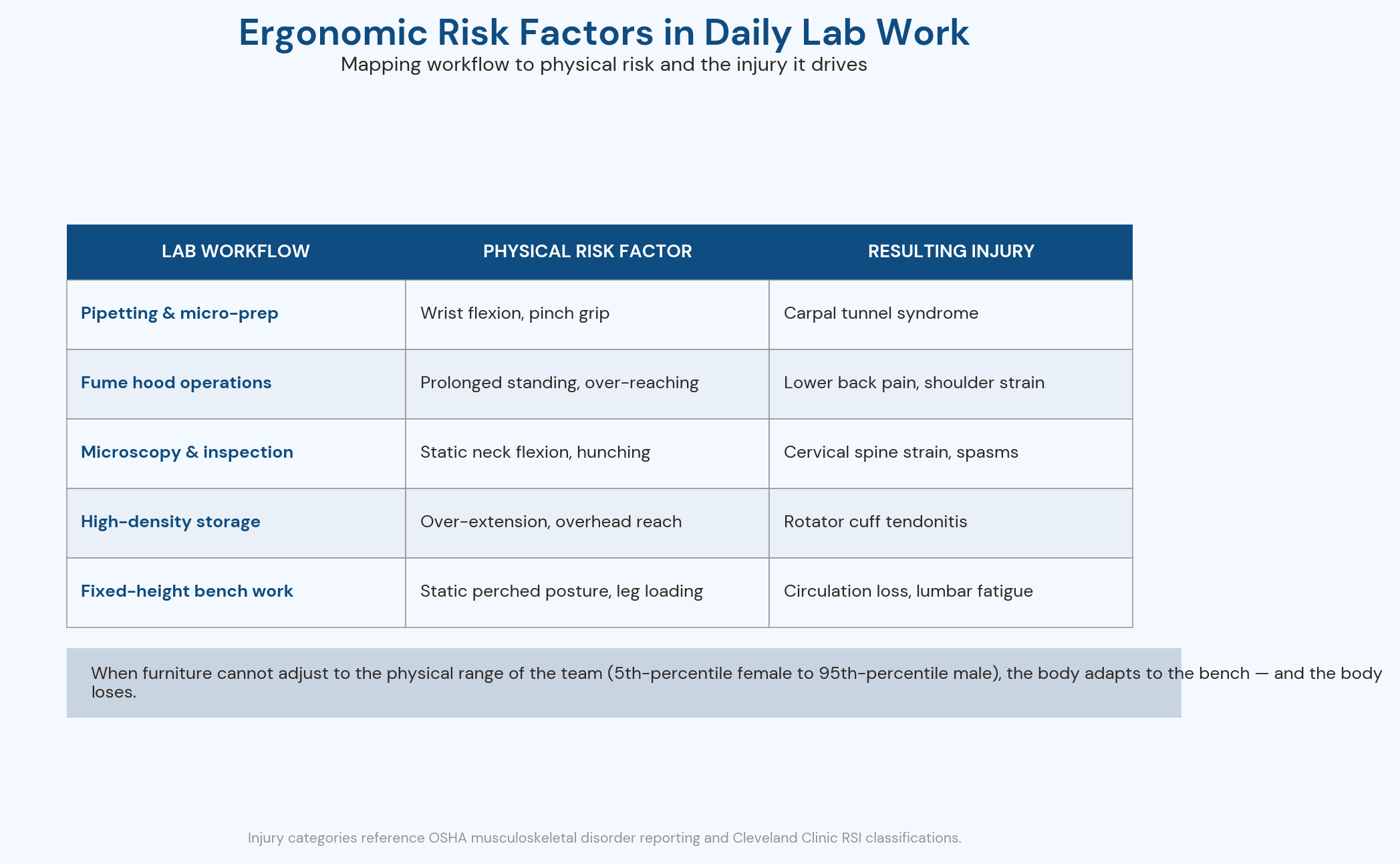
First, you need to see where strain shows up. The table below maps common lab workflows to their risk factor and the injury each one tends to drive. Preventing RSI in research labs starts by understanding these ergonomic risks.
| Lab workflow | Physical risk factor | Resulting injury |
|---|---|---|
| Pipetting and micro-prep | Wrist flexion, pinch grip | Carpal tunnel syndrome (CTS) |
| Fume hood operations | Prolonged standing, over-reaching | Lower back pain, shoulder strain |
| Microscopy and inspection | Static neck flexion, hunching | Cervical spine strain and spasms |
| High-density storage | Over-extension, overhead reach | Rotator cuff tendonitis |
| Fixed-height bench work | Static perched posture, leg loading | Circulation loss, lumbar fatigue |
When furniture cannot fit the range of body sizes on the team, the team adapts to the bench. Over months, that habit becomes chronic strain and contributes to the RSI problem that every research lab should prevent.
Ergonomic surface and casework matrix
The next table shows how specific workstation features counter each risk. Use it as a starting point for the furniture schedule and preventing RSI within research labs by design.
| Lab zone | Primary RSI risk | Recommended solution | Key metric or standard |
|---|---|---|---|
| Analytical / micro-prep | Wrist deviation, forearm fatigue, pinch-grip strain | Bevel-edged epoxy or phenolic tops with padded arm rests | Radius edges reduce sharp 90° contact stress on forearm nerves. |
| Fume hood and titration | Fixed standing posture, static back extension | Push-button height-adjustable tables or hood support | Dual-motor electric frames with a 26″ to 44″ sit-to-stand range. |
| Microscopy and inspection | Static forward neck tilt, hunched upper back | Adjustable-tilt workstations and articulating monitor arms | Meets ANSI/BIFMA G1-2013 ergonomics guideline for computer workstations. |
| High-density storage | Overhead reaching, awkward twisting | Under-bench mobile cabinets and pedestals on smooth casters | Rated for 500+ lbs. Smooth drawer glides keep pulling effort under 5 lbs. |
Four rules for preventing RSI in research labs
Rule 1: Mandate sit-to-stand height adjustability
A fixed 36-inch bench forces seated techs to perch on tall stools. That perch tends to cause leg numbness and slouching. So switching to electric height-adjustable lab benches is often the single highest-leverage move in any research lab focused on preventing RSI.
Users can then shift posture through the day. A change every 30 to 45 minutes moves spinal load, boosts blood flow, and keeps energy up during long runs. This is an easy win for research facilities intent on preventing RSI in their labs.
Rule 2: Kill contact stress at the edge
Square-cut table edges press into the soft tissue of the forearms during pipetting or typing. Over time, that pressure hits the median nerve. And that is a main driver of carpal tunnel, so addressing this is critical for research labs working to prevent repetitive strain injury.
Instead, spec work surfaces with rounded edges or a smooth 1/8-inch radius bevel. The soft profile spreads contact force across the forearm. It no longer lands on a hard line, which is key in preventing RSI for lab personnel.
Belly cutouts in the top can also help. They pull the tech closer to the work zone without leaning. As a result, the shoulders stay neutral and the forearms load evenly, supporting the overall strategy of preventing RSI in research labs.
Rule 3: Hold the primary reach zone
The primary reach zone is the semi-circle a seated tech can reach with a neutral elbow. In practice, that zone is roughly 0 to 14 inches from the body, and organizing tools here is part of any RSI prevention strategy in research labs.
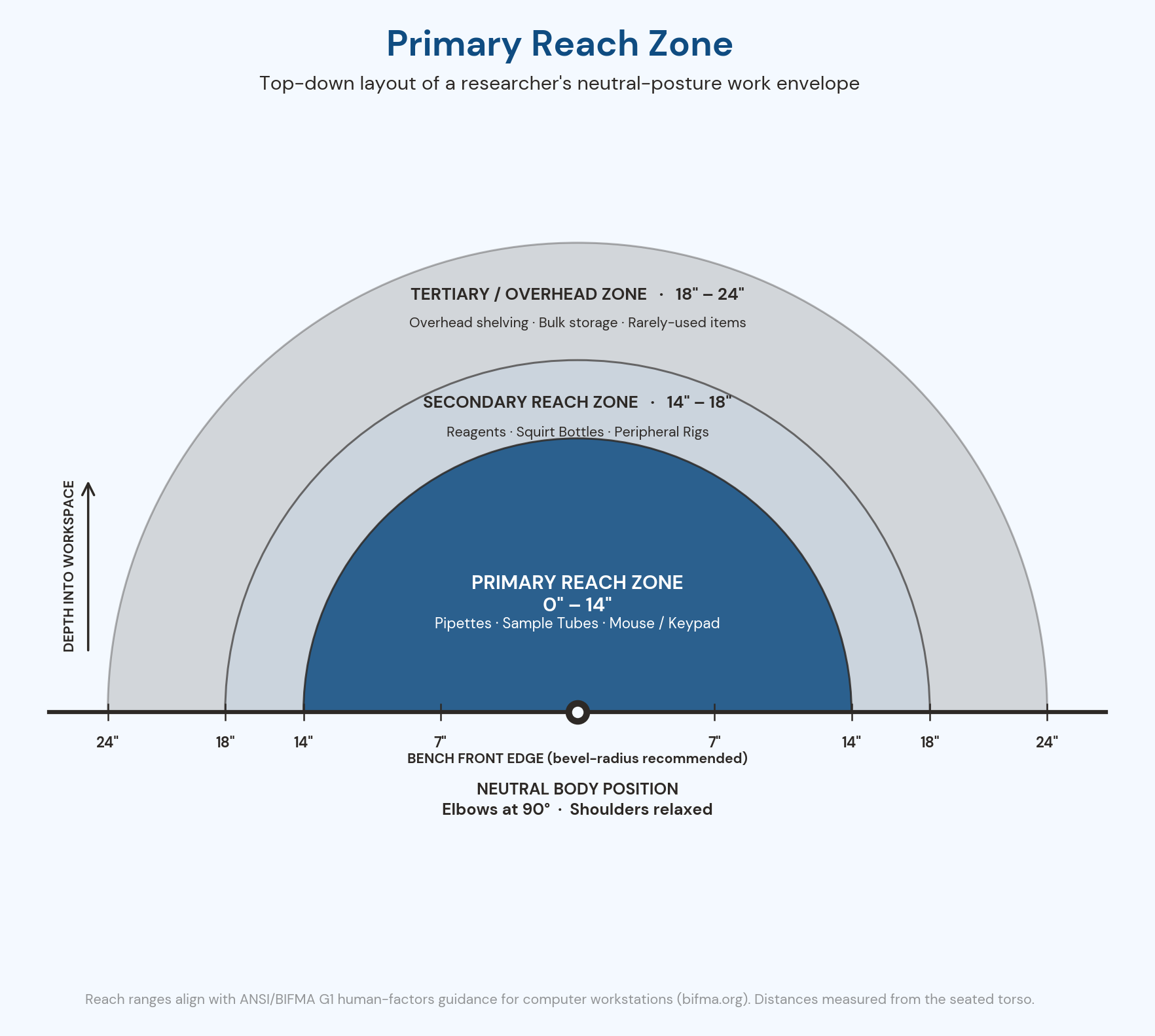
Keep high-frequency items — pipette racks, sample trays, keyboards, and mice — inside the primary zone. Store second-tier tools in the 14 to 18 inch band. Park rarely-used items on overhead shelving. This keeps RSI risk low for those working in research lab environments.
Rule 4: Spec task-specific seating
Standard office chairs generally do not work at high lab benches. Instead, lab-grade seating should offer features designed with preventing RSI in mind for research staff.
- A shaped seat pan with a waterfall front edge. This keeps pressure off the back of the knees and serves as one aspect of RSI prevention in research labs.
- A 360-degree, height-adjustable foot ring. Feet stay supported at high bench heights, a useful detail for RSI prevention in lab research environments.
- Non-porous vinyl or polyurethane upholstery. It stands up to harsh wipes without cracking. Keeping seating ergonomic and easy to clean aids with RSI prevention, especially in research settings.
- Active lumbar support and tilt. The chair moves with the tech, not against them. Again, lumbar support is crucial for preventing RSI in active research labs.
Frequently asked questions on preventing RSI in research labs
Q: What most often causes repetitive strain injuries in labs?
A: Three drivers dominate. First, manual pipetting. Next, static neck posture at the microscope. And last, long stretches of standing at fixed-height benches. Any program focused on preventing RSI in research labs should address all three drivers.
Q: What bench height is recommended for lab work?
A: Seated lab work needs a bench of 28 to 30 inches. Standing precision work needs 34 to 38 inches. An electric adjustable table covering 26 to 44 inches can fit both, for most body sizes and supports goals of RSI prevention in research labs.
Q: How do height-adjustable tables improve lab safety?
A: They cut fatigue, back load, and neck strain. And in a neutral posture, the team may also be less likely to spill samples or drop glass. Long-term injury risk drops too. It’s a key measure for labs focused on preventing repetitive strain injuries in their research environments.
Q: How often should researchers change posture?
A: A good rule of thumb is a posture change every 30 to 45 minutes. That cadence redistributes spinal load and keeps circulation moving during long runs. These kind of practices are essential when preventing RSI in research labs is a core objective.
Design out RSI with OnePointe Solutions
Designing an ergonomic, high-throughput lab requires engineering built for the real demands of science. With a focus on preventing RSI in research labs, customized solutions help you protect your team effectively.
At OnePointe Solutions, we build SEFA-compliant lab furniture in Elgin, Texas. Our line includes electric height-adjustable tables, cantiliver frame modular Proteus workstations, custom ESD benches, ergonomic lab seating, and heavy-duty steel casework. We engineer spaces that protect the team and keep the facility moving—always aware that preventing RSI in research labs directly affects productivity and staff wellbeing.
Ready to upgrade your facility’s ergonomics? Reach out to us, we’re ready to begin. Start your project focused on preventing RSI in your research lab today!