


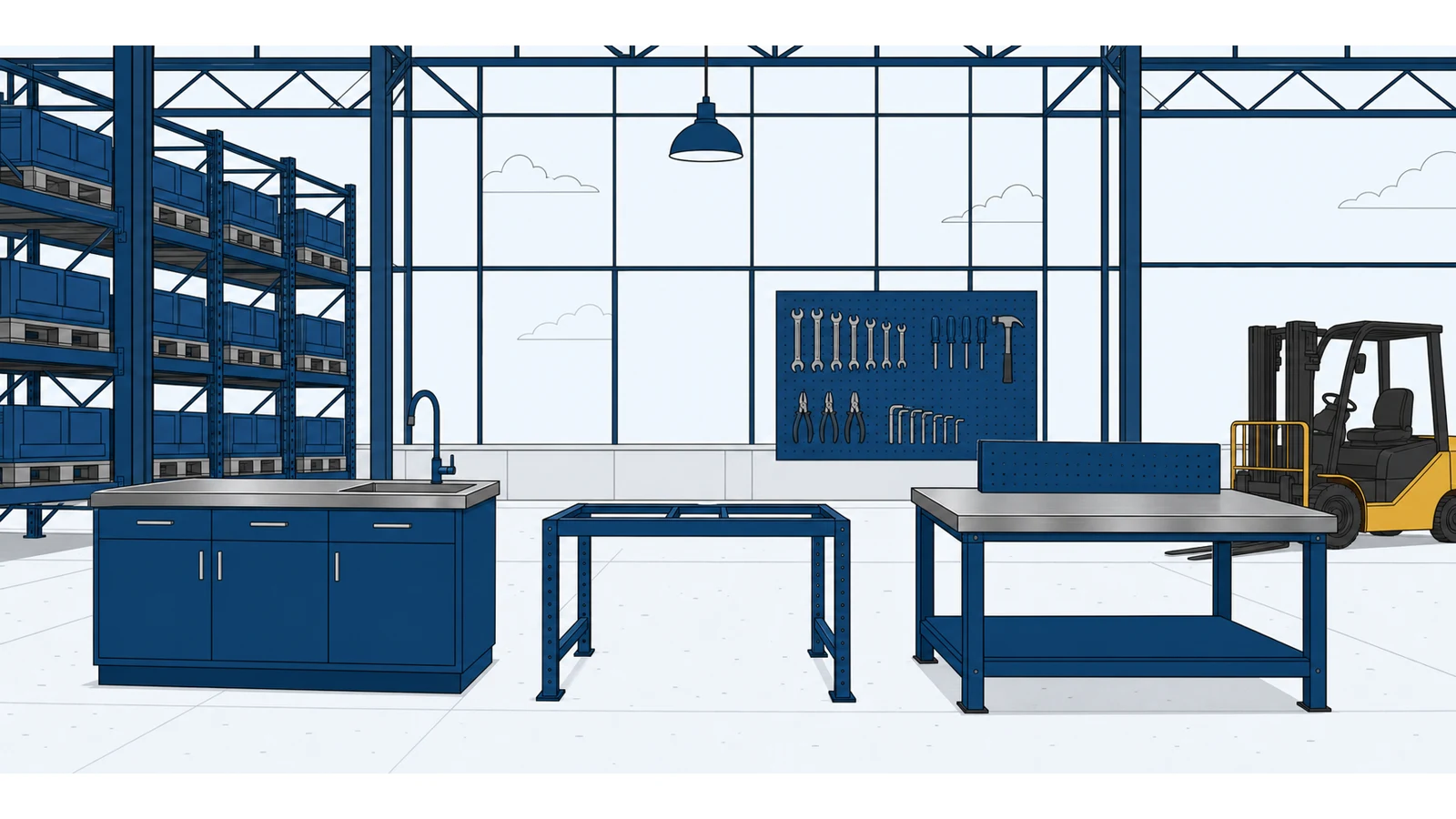
The honest answer most owners do not want to hear: the best time to buy lab furniture was last quarter. The second-best time is right now. The worst time is the one when most people actually start the conversation – three months before a hard occupancy date, in the middle of summer, with a school district or university competing for the same factory slots. It’s important to keep in mind how lab furniture lead times greatly affect your project schedule.
For this new blog issue, we’re taking a slight detour from our typically content to talk about what everyone wants to know but hasn’t been put to paper. Given our experience over the years, we wanted to create a guide, walking through the procurement calendar of what we’ve gone through and seen over the years. It covers why lab furniture is made to order rather than pulled off a shelf, how lead times shift across the year, which quarter is the right one for which buyer type, and what quick-ship really means when a manufacturer offers it. Now of course, this is isn’t the end all be all. As there are always outliers, exceptions, hidden surprises. But it can be a rule good of thumb to have in the back of your mind when it’s time to procure lab furniture again.
Lab Furniture Is Made to Order, Not Pulled Off a Shelf
A major, if not single biggest, misconception in laboratory procurement is the idea of “off the shelf” casework. It does not exist. The Scientific Equipment and Furniture Association (SEFA) defines its members as firms that “control the design and manufacture of one or more laboratory grade products… at applicant owned/leased and controlled, manufacturing facility.” Per the SEFA 5th Edition Desk Reference, fabrication out-sourcing to non-applicant facilities does not even qualify as eligible work for membership. The implication is direct. SEFA-grade lab furniture is built in a manufacturer-owned plant. It is not warehoused in finished form waiting for an order. In addition, with various customization options to where no lab is exactly the same, further proves why off the shelf is not an proper mindset to have with laboratory furniture.
The Architectural Woodwork Institute describes the same model on the millwork side. AWI 100 Submittals require approved shop drawings before fabrication begins. Cut sheets, finish samples, hardware submittals, and field measurements all come before a single panel gets cut. Off-the-shelf items are explicitly excluded from this approval process — because off-the-shelf items are not what a lab buys.
What that means for the buyer is straightforward. Lab furniture orders, dependent upon the manufacturer and project type, move through similar gates. Submittal package. Shop drawings. Owner and architect approval. Field measurement. Fabrication. Quality test. Pack and ship. Field install. Compressing that sequence is possible only at specific points. Skipping some steps is possible if not going though a bid process and if a lab is buying direct.
Why Summer Is the Worst Time to Order
Here is the part that catches new buyers off guard. Summer looks like it should be the calm season for a furniture factory. Construction schedules are running. Trades are on site. The lab is empty for the renovation. It feels like the right window.
It is the wrong window. Summer is when the academic procurement wave hits. Most U.S. universities and colleges run on a fiscal year that begins July 1 and ends June 30 — the University of Southern Mississippi, Ball State, the University of Hartford, and most state systems all publish the same July 1 fiscal start. The Grant Accounting Office at the University of Iowa confirms it directly: “The university’s fiscal year begins on July 1 and ends on June 30.” Funds become available July 1.
That timing creates a predictable bottleneck. Renovation budgets that have been waiting on the new fiscal year hit the procurement pipeline in late June and July. Schools want the work done before the fall semester. Manufacturers see the demand stack up. Factory slots fill. Lead times stretch. A 4-to-6-week standard lead-time window can move out to 10, 12, or 14 plus weeks depending on the manufacturer’s backlog.
The federal side compounds it. Per the GSA, the federal fiscal year runs October 1 to September 30, and Q4 — July through September — is the busiest spending quarter. Agencies push to obligate remaining budget before September 30. Federal lab procurement, including NIH equipment programs, lands on factory floors at the same moment academic renovation demand peaks. Two procurement waves, same quarter, same manufacturers.
The Best Window: Q1 and Early Q2
An ideal time to place a lab furniture order is the beginning of the calendar year. January, February, and early March are typically low pressure months at most SEFA-grade manufacturers. The academic FY-end rush is behind. The federal Q4 surge is months away. Submittal queues are shorter. Shop drawing approvals move faster. Quoted lab furniture lead times are at their published baselines rather than stretched.
That is the real reason early-year ordering matters. It is not about price. It is about predictability. A January order moves through submittal, fabrication, and ship on the manufacturer’s published schedule. A July order moves through the same gates, but each gate has more orders ahead of it. The actual fabrication time per cabinet does not change. The queue length does.
The Practical Rule: Order in the Previous Quarter
For most buyers, the working rule is simple. If you need lab furniture installed in a given quarter, place the order in the quarter before. Furniture needed in Q3 should be ordered in Q2. Q4 installs should be ordered in Q3. Q1 installs should be ordered in Q4 of the prior year. But
This is not a manufacturer’s preference. It is a function of the production sequence. A standard SEFA-grade casework run requires submittal approval, shop drawing turn, field verification of dimensions, and a fabrication window. Per the AWI standards, field measurement happens “after framing, drywall, and rough flooring are complete.” The lead time the manufacturer quotes starts after submittal approval, not after the verbal order. Add submittal and approval time to fabrication time and the previous-quarter rule lands inside the actual production envelope.
Exceptions exist. A single table with no accessories, base cabinet, or countertop can sometimes move faster, not always – especially if the manufacturer has a stock laminate or epoxy top available in a standard dimension. A full lab build with custom laboratory casework, custom finishes, and a coordinated install sequence cannot. But always best to confirm with the manufacturer their lead time on single items before assuming.
When the Schedule Slips: Expedited Options
Sometimes the schedule does not allow for the previous-quarter rule. A grant award comes in late. A facilities decision moves up. A tenant deadline accelerates. When that happens, the question becomes whether expedited fabrication is available and at what cost.
Not every SEFA-grade manufacturers offer some form of expedite. As mentioned prior, always best to ask first before assuming. However, if expedition is possible, the terms vary, but the pattern is simple. Expedited fabrication typically requires a finished submittal package, a finalized field-verified dimension list, and confirmation that the manufacturer’s shop can pull the order forward in the queue. Expedite fees are real. They compensate the factory for overtime, for second-shift labor, and for displacing other queued orders. They are not a discount lever, they are a service surcharge.
The honest framing for any owner considering expedite is this. Expedite costs more. It is a tool for genuine schedule pressure, not a substitute for early ordering. If the project timeline is known, the cheaper and more predictable path is to order earlier and pay the published rate.
Quick-Ship Programs: What They Actually Are
Dependent upon the manufacturer and product, they might maintain some form of quick-ship program. These are real, but they need to be understood for what they are. A quick-ship program is a defined sub-catalog of pre-determined product. Specific cabinet sizes. Set finishes. Limited worktop materials. Condensed door and pull configurations. No customization.
The reason quick-ship works is that the manufacturer can hold a small inventory of standard components or schedule predictable production runs against a known demand pattern without committing to off-the-shelf stocking of a full custom line. The customer trades selection for speed.
For some buyers, quick-ship is exactly the right tool. A small renovation, a temporary lab, a swing-space buildout, or a single replacement lab table or workbench can all be good fits. For a full lab with coordinated services, a specific design intent, or any non-standard dimension, quick-ship rarely works as the primary solution. The selection menu is too narrow to cover the actual scope.
The Buyer Calendars That Drive the Cycle
Knowing who else is buying when helps a buyer place an order in the lowest-demand window for their type of project. The three calendars that drive most lab furniture demand:
Academic (July 1 fiscal start). Universities and colleges typically obligate renovation budget in late spring and procure through summer. Per the published Fordham University fiscal close procedures, FY26 purchase orders can be submitted starting June 16 for goods received July 1 or later. That single date — the FY procurement open — drives the summer factory wave.
Federal (October 1 fiscal start). Federal agencies push to obligate before September 30. Per GSA, the Multiple Award Schedule handles roughly $45 billion in annual purchasing, with Q4 (July-September) consistently the heaviest spending quarter. Lab furniture orders going through GSA Schedule land on factory floors in that same Q4 window.
NIH-funded research equipment (rolling). Per the NIH standard due dates, R01 cycles run on a February-June-October calendar. Funded equipment purchases for new awards land on procurement schedules within months of those cycles. The S10 and S15 instrumentation grants have September 25 due dates with July award starts — which puts NIH-funded equipment buys squarely in the summer wave.
Commercial and industrial (calendar year). Most private-sector lab clients operate on calendar fiscal years. January and February budget releases drive an early-year demand bump that is smaller and more predictable than the academic or federal waves.
What “Lead Time” Actually Includes
One of the most common sources of friction in a lab project is the difference between the lead time the buyer thinks they are getting and the lead time the manufacturer is actually quoting. The published lab furniture lead times from a SEFA-grade manufacturer typically refer to fabrication and ship from the moment the submittal package is approved and the field-verified dimensions are locked.
That excludes the front end. Submittal preparation, shop drawing turn, owner and architect review, revision cycles, and field measurement all happen before the lead-time clock starts. For a straightforward renovation, the front end can add two to four weeks. For a complex build with multiple revisions, it can add six to ten weeks. The buyer who sees a “6-week lead time” on a quote and assumes a 6-week project from order to install is the buyer who ends up calling the manufacturer in week 4 wondering where the cabinets are.
Specifying the Project: A Practical Order of Operations
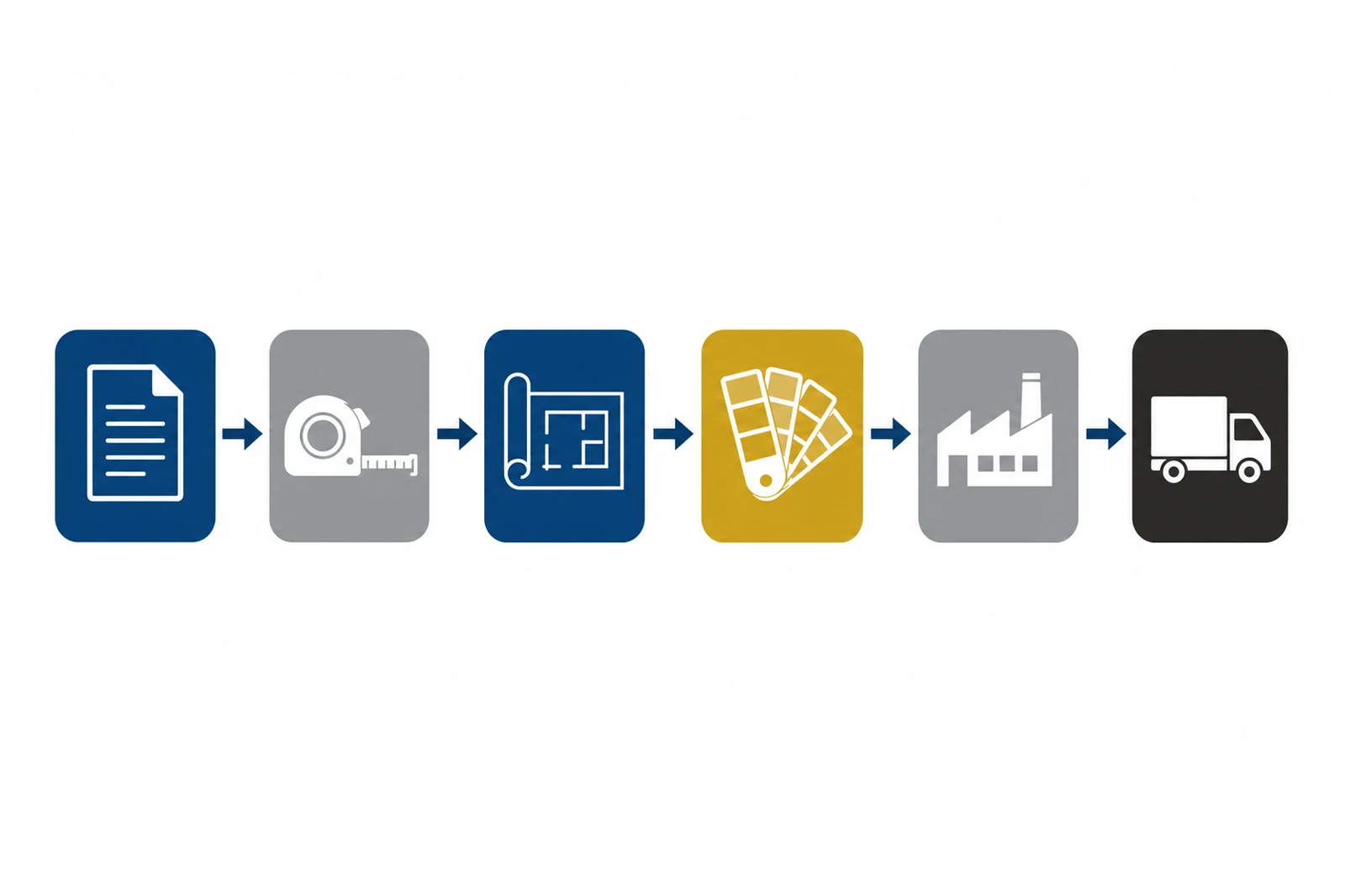
For a project on a real schedule, the right sequence is:
- Define the scope first. Casework, fume hoods, worktops, sinks, services — full list before any vendor conversation.
- Lock the dimensions. A field measurement after framing and rough flooring is the only number that matters for fabrication.
- Submit drawings. Per AWI 100, approved shop drawings precede fabrication. Lead time starts here.
- Lock the finish schedule. Worktop material, cabinet color, pull style, hardware — all committed before fabrication.
- Confirm the ship date in writing. A quoted ship date is a ship date, not an install date. Site readiness is the buyer’s side of the schedule.
- Coordinate the site for receiving. The installer needs a clean, ready space. A finished cabinet sitting on a dirty floor while drywall finishes is a damaged cabinet.
Every step above shifts the actual install date earlier than improvising the same sequence in the wrong order.
What it All Comes Down to
Lab furniture is custom-built. The manufacturers who make it do not run an off-the-shelf model — they run a made-to-order shop floor anchored to SEFA and AWI standards. Lab furniture lead times are predictable when the order goes in during a low-demand quarter and unpredictable when it competes with the academic and federal waves in summer and early fall. Q1 and early Q2 are the right ordering windows for most buyers. The previous-quarter rule covers the rest. Expedite and quick-ship exist as real tools for real schedule pressure — they are not substitutes for ordering early. Best rule, always order sooner, lock in that lead time and breath just a bit easier.