


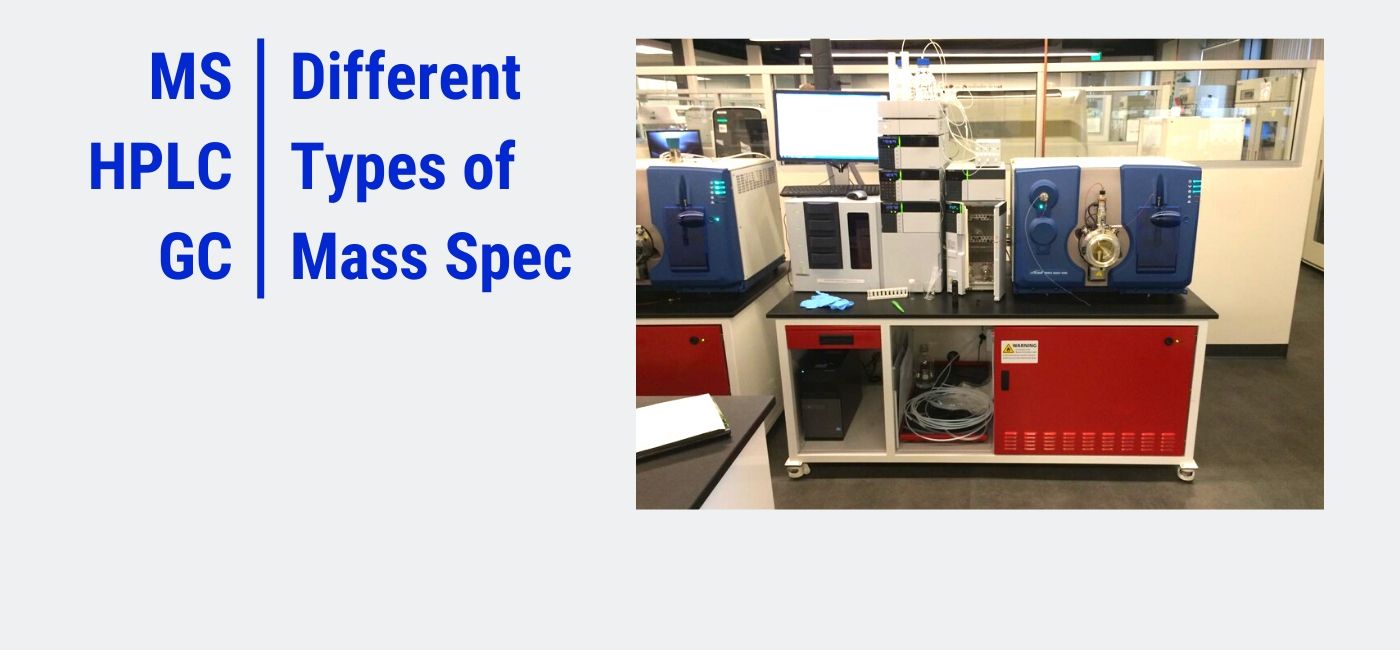
What is Mass Spectrometry?
Mass spectrometry deals with the quantifying and qualifying of the molecular components of a sample. Mass spec instruments are essential tools for this process. Ideal for chemical testing, testing for soil and water quality, pharmaceutical potency and structure, cannabis testing, and other bioscience research, spectrometry is now a broad and varied field.
Like the field itself, spectrometry equipment is diverse and varies from specialty to specialty. As a matter of fact, many labs rely on advanced mass spec instruments for their unique applications.
At OnePointe Solutions, we can design MS carts and benches to fit the specifications of virtually any lab, including those utilizing instruments from the following fields of spectrometry:
Mass Spectrometry
Scientists uses the field to determine the mass-to-charge ratio of a sample containing at least one molecule. It’s not only quantifying known components of a sample, but also to identify and qualify the unknown components as well. When these discoveries are made, mass spec instruments often play a central role.
Mass spectrometers use a combination of heat and vacuum pressure to vaporize samples, then push the vapor through a ‘smasher’ that separates the molecular components for sorting. The weight of the molecules gives researchers the necessary information to identify the various components of the sample and begin to analyze its molecular structure.
Mass spectrometry is used in a huge number of applications including:
- Biofuel generation
- Pesticide screening
- Clinical drug development
- Disease screening
- Crime scene analytics
High-Performance Liquid Chromatography
Like mass spectrometry, HPLC is a method also to qualify and quantify the different components of a sample. In the case of HPLC, the sample is analyzed in liquid rather than vapor form, whereas mass spec instruments generally function with vaporized samples.
In this process, the sample, mixing it with a liquid solvent, then pressurized and passed through a column. Each component of the sample interacts differently with the absorbent material within the column, automatically sorting the various parts of the sample. Furthermore, for labs utilizing mass spec instruments, identifying these components can be precise.
HPLC usages:
- Pharmaceutical drug development
- Narcotics and drug detection
- Nutrient analysis
- Species identification
- Cannabis testing
Gas Chromatography-Mass Spectrometry
For the detection, sorting, and quantifying the chemical components of the sample, GCMS pulls from both gas chromatography and mass spectrometry to make discoveries. This method comes to play when components won’t degrade due to heat exposure, and specially designed Mass Spec Instruments are often critical for these analyses.
First, heating the samples initiates the separation of molecules. The sample molecules are Then mixing the sample molecules with inert gas like helium rt gas, like helium, and sent through a column. Next, the molecules emerge into the mass spectrometer where they are sorted and identified—another situation where mass spec instruments are involved in research.
GCMS usages:
- Criminal forensics
- Chemical engineering
- Food and beverage analysis
- Perfume analysis
- Metabolic disease screening and detection
Need a Custom Instrument Bench?
The custom manufacturing team at OnePointe Solutions can provide fully custom benches for specific mass spec instruments. Whether you need vacuum pump enclosures, sound dampening, LCD monitors arms, or something else, we design heavy-duty steel lab benches for your exact instrument needs.
Contact us by calling (866) 612-7312 or filling out a contact form. A sales rep will reach out by phone or email to discuss your needs and send you drawings and pricing. Also, we can answer questions regarding mass spec instruments for your lab environment.